


Optimize SaaS usage: How to prevent shelfware with software asset management strategies
December 16, 2025
10 minute read

The need to optimize SaaS usage is now a top priority for IT and finance leaders. Industry research highlights the scale of this problem: Gartner estimates that as much as 25% of all SaaS spend is wasted or heavily underutilized. This massive inefficiency demonstrates why organizations must actively optimize SaaS usage.
So how did we get here? It goes back to the rise of SaaS, and how it fundamentally changed how businesses acquire and use software. Replacing large, upfront capital expenditures with flexible, recurring operating expenses was liberating, allowing departments to quickly adopt new tools. However, this ease created a critical challenge for every organization: unchecked SaaS app proliferation and huge budget waste.
At the heart of this waste is shelfware. This term has long described software licenses that an organization pays for but that go completely unused or are significantly underutilized. Shelfware’s impact goes beyond the financial drain; it introduces security vulnerabilities from dormant accounts and adds operational complexity to the IT landscape.
The solution is not just another cost-cutting exercise. True SaaS optimization requires a strategic, disciplined framework, and we’re here to help. This article details:
- How adopting the principles of Software Asset Management (SAM) and Application Portfolio Management (APM) provides continuous SaaS governance
- Tactical execution to optimize SaaS usage
- Concrete strategies for how to prevent shelfware from silently draining your budget, including deploying a unified SaaS management platform (SMP)
Build your strategic foundation: Software asset management for SaaS
In the modern enterprise, software asset management is the control center for all software assets, and its role has fundamentally changed. Traditional SAM focused on tracking perpetual licenses for on-premise software. Modern SAM for SaaS, however, must focus on three core characteristics: consumption, utilization, and governance, all working together to optimize SaaS usage.
The mandate of modern software asset management
- Financial stewardship: The primary goal remains ensuring every dollar spent on a subscription delivers measurable business value. This is the first step to optimize SaaS usage.
- Risk mitigation: Controlling access, ensuring only necessary accounts are active, and maintaining compliance are key aspects of managing software licenses.
- Data foundation: SAM must establish a single, reliable source of truth by aggregating usage data from multiple vendors and financial systems.
For SaaS, effective software asset management requires a dedicated software solution—a SaaS management platform—to automate the discovery, tracking, and governance processes that are simply too complex to manage manually across dozens or hundreds of applications.
In the next sections, we’ll look at the 4 crucial phases of SaaS governance, including software asset management, application portfolio management, SaaS usage optimization, and long-term strategies for a cost-efficient SaaS stack.
| Phase | Focus Area | Key Actions |
|---|---|---|
| 1. Visibility | Software Asset Management (SAM) | Discover your SaaS portfolio using SSO logs, financial data, and APIs. Define usage thresholds to identify shelfware Implement automated offboarding/de-provisioning rules |
| 2. Strategic governance | Application Portfolio Management (APM) | Identify functional overlap and redundant tools Consolidate licenses onto standardized platforms Establish a mandatory vetting process for all new SaaS purchases |
| 3. Tactical execution | Optimize SaaS Usage / Value Recovery | Automate license harvesting from inactive users Right-size licenses by downgrading users from premium tiers based on actual feature use Leverage utilization data to negotiate contract renewals |
| 4. Culture and adoption | Long-Term SaaS Health | Provide continuous training to drive user adoption Collect user feedback using sentiment surveys to ensure tools provide the expected business value |
Phase 1: How to prevent shelfware with full visibility
The first and most crucial step in the optimization journey is gaining complete visibility into your entire software stack. You cannot manage what you cannot see, and this blind spot is the root cause of shelfware. Achieving visibility is essential to optimize SaaS usage.
Discover the unknown
The ease of purchasing SaaS means individual teams or employees often sign up for tools without IT oversight, a phenomenon known as Shadow IT. To overcome this, software asset management must employ automatic discovery techniques. Highlighting the pervasive nature of Shadow IT, Gartner estimates that 75% of employees are expected to acquire, modify, or create technology without IT’s oversight by 2027, up from 41% in 2022.
To surface all SaaS in your organization, you need to rely on data from 3 main sources:
- SSO logs: Integrating with your Single Sign-On provider offers the best view of who is accessing what
- Financial data: Cross-referencing expense reports and accounts payable data for subscription names
- API integrations: Direct connection to high-value SaaS applications to pull granular usage data
Define and diagnose shelfware
Once data is gathered, you must define what constitutes shelfware in your organization:
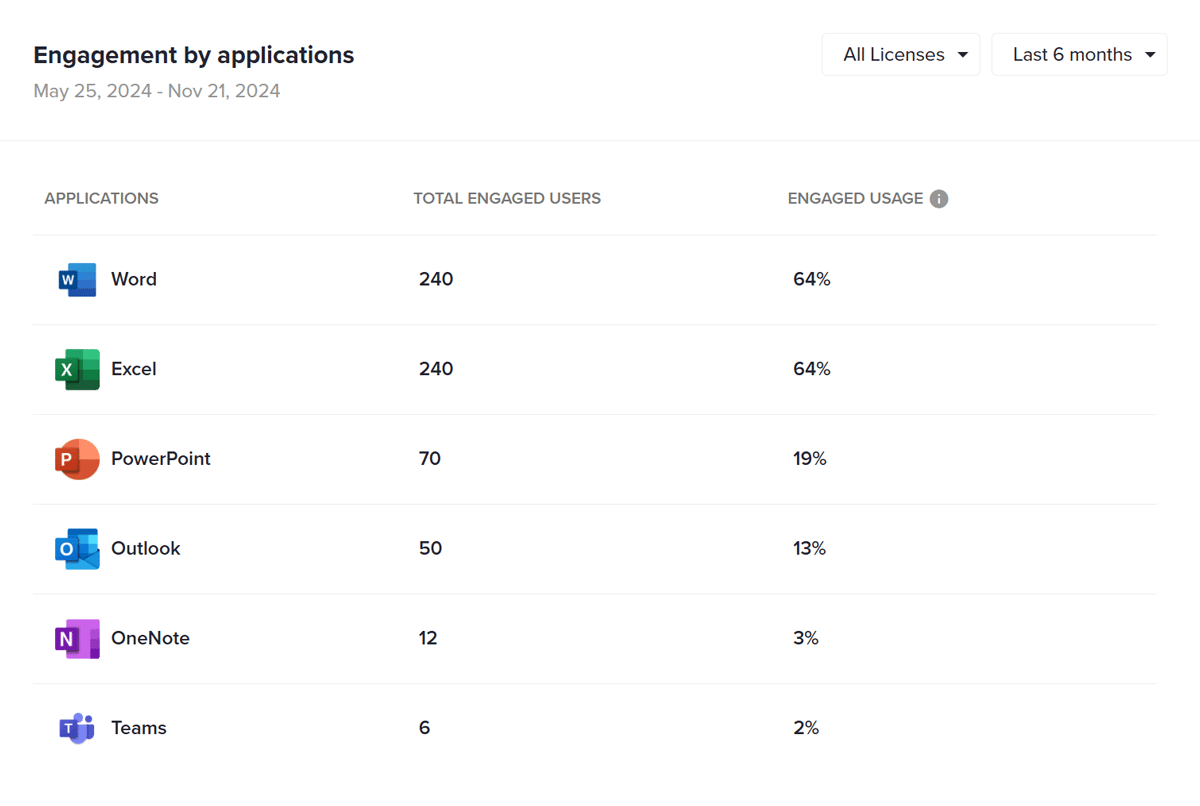
The shelfware metric: Establish a formal KPI, such as the utilization rate (active users / total licenses), to spot where waste is most prevalent.
No usage: Licenses with zero login activity (e.g., over a 30/60/90-day period). These are immediate candidates for reclamation and redeployment to another user who can make the most of them.
Feature gaps: Identify users provisioned for expensive high-tier licenses (e.g., enterprise) who have low engagement using only basic functions, resulting in value shelfware. It’s up to you to determine what you consider low engagement because it will vary by SaaS tool.
Implement proactive strategies for how to prevent shelfware
The best defense is a proactive license management strategy built into your procurement and HR workflows:
- Centralized procurement: While 69% of organizations say IT works with departments, as well as finance, operations and/or procurement to buy or renew SaaS, only 30% claim to have an effective SaaS purchasing and renewal process. With top executive support, establish and document an effective internal review process where any new SaaS purchase and renewal, regardless of cost, must be vetted by IT/SAM.
- Just-in-time (JIT) provisioning: Automate provisioning so licenses are only assigned when a user needs and uses them, avoiding speculative purchases.
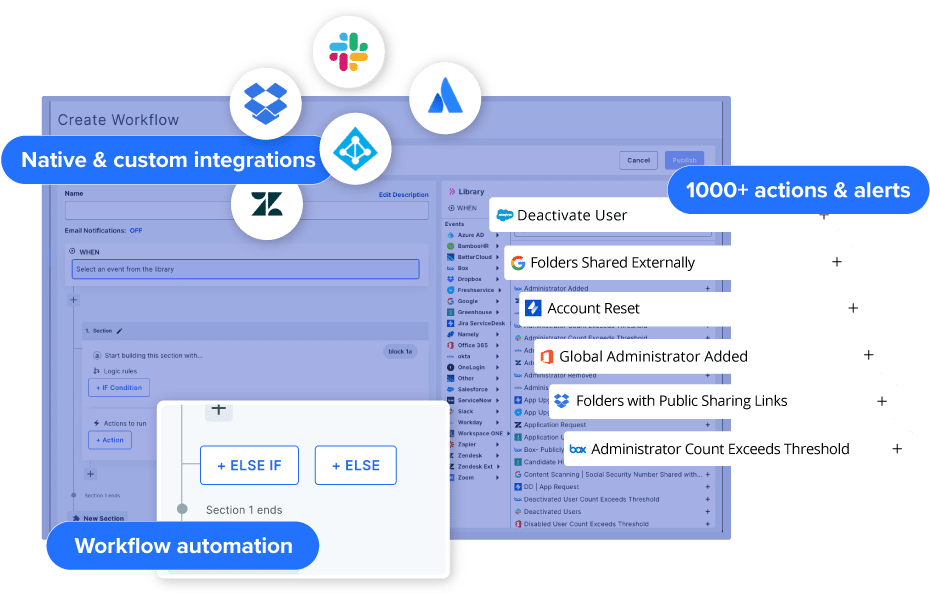
- Zero-touch automated offboarding: Tie HR offboarding directly to automated de-provisioning workflows. When an employee leaves, files are secured, and license access is instantly revoked and reclaimed, a non-negotiable step for effective managing software licenses.
Phase 2: Strategic governance with application portfolio management
While SAM provides the data, application portfolio management provides the strategic direction. APM is the process of assessing the business value, technical health, and functional fit of every application in your software stack. Usually done by IT, vendor management or ITAM teams, it shifts the focus from just “cost” to “utility.” APM provides the framework to systematically optimize SaaS usage.
Use APM as your strategic filter
Application portfolio management allows organizations to view their technology as an investment portfolio, ensuring that investments are allocated to the most valuable and productive assets.
Undergo portfolio rationalization and consolidation
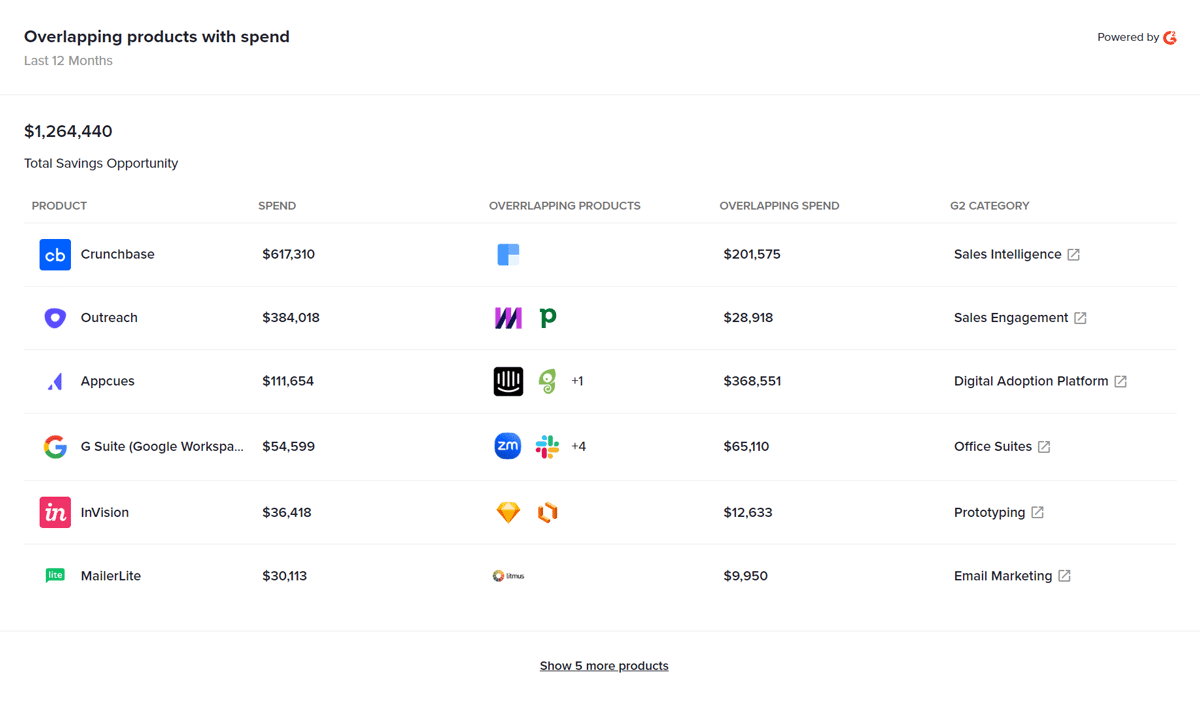
The most common symptom of poor APM is functional overlap—multiple tools performing the same function, like having three different cloud storage services or multiple graphics tools.
- Eliminate redundancy: Actively seek out redundant tools and accounts. The average enterprise now juggles dozens and dozens of SaaS subscriptions, drastically increasing the likelihood of functional overlap and redundancy.
- Create organization-wide standardization: Choose one “best-of-breed” IT-sanctioned solution in each category, like a single project management platform. Once selected, consolidate all licenses to that tool. This process streamlines the tech stack, reduces complexity, and is a core strategy to optimize SaaS usage.
Follow a defined APM vetting process
Application portfolio management should govern the entire lifecycle of a SaaS tool:
- Vetting: Requiring a formal review of business case, security posture, and integration needs before any new purchase.
- Adoption strategy: Ensuring mandatory training and change management are planned before launch to maximize adoption and reduce future shelfware.
- Retirement: Defining a clear, data-driven process for retiring tools that no longer serve a strategic purpose.
Phase 3: Tactical execution, optimization, and value recovery
This phase is the engine of optimization, where the data gathered by software asset management is used to execute immediate and long-term cost-saving actions. This is where teams can maximize value, and ensure continuous software asset management – aiming to continuously optimize SaaS usage through hands-on actions.
Harvest, reclaim, and redeploy licenses for quick savings
The most immediate financial return comes from reclaiming unused seats and is central to managing software licenses.
- Automated reclamation workflows: Set up workflows using a no-code workflow engine to automatically suspend or de-provision users flagged as inactive for a set period (e.g., 45 days). To mitigate business disruption, include a mandatory 7-day “warning notice” to the user and their manager.
- License pooling: Reclaimed licenses should be centralized in a “pool” for immediate reassignment to new hires or users needing that application. This practice directly reduces the need for new license purchases, further helping to optimize SaaS usage.
- File and data retention policy: Ensure that data belonging to a de-provisioned user is backed up or transferred to a manager before the license is permanently revoked. This way, no institutional knowledge or important work is lost, and file security is assured.
Tier and optimize feature usage to maximize value
This tactic moves beyond reclaiming unused seats to reclaiming wasted value by right-sizing licenses to actual usage:
- Data-driven downgrading: Use granular utilization data (pulled via API) to identify users who are provisioned with premium or enterprise licenses but never access the premium features. For example, a user with a “Pro” subscription to a CRM who only logs contacts and never uses the advanced sales pipeline or analytics features.
- Bulk downgrade automation: Implement automated workflows to move these users to a less expensive tier. This action directly reduces the per-user cost for the same amount of actual consumption, providing a substantial way to optimize SaaS spend.
- Consumption tracking: For SaaS applications billed on usage, track them according to your SaaS agreement. This helps prevent budget overruns from unexpected spikes and identifies areas of under-consumption that require contract adjustments. This is critical to optimizing SaaS usage.
Negotiate renewals with data for the biggest savings
The largest savings often come not from daily reclamation but from effective contract management. This requires using the data gathered by software asset management as leverage to truly optimize SaaS usage.
- The 90-day window: Establish a mandatory 90-day alert before any auto-renewal date. This time is crucial for assessing needs, making reclamation efforts, and preparing a negotiation strategy.
- The power of proof: When entering renewal negotiation, present the vendor with hard data on current usage and future projections. When you’re able to say, “We only use 70% of our current seats,” you’re in a better position to negotiate a lower seat count, better per-user pricing, or the inclusion of needed features at no extra cost. The data you use to optimize SaaS usage is a powerful negotiating tool.
- Benchmark data: Utilizing industry or peer benchmark data, if available, to challenge vendor pricing and ensure fair market rates.
Phase 4: Long-term adoption and culture change
Technical solutions are only half the battle. If users don’t adopt the approved tools, the problem of shelfware will persist. A successful strategy to optimize SaaS usage must address the human factor.
The human factor and how to prevent shelfware
- User training and support: Ensure robust, ongoing training is provided, especially after major feature updates or migrations. Lean on SaaS vendors’ customer success teams to make sure your teams can get the most out of a tool. If users don’t know how to use a feature, they won’t, leading to feature shelfware.
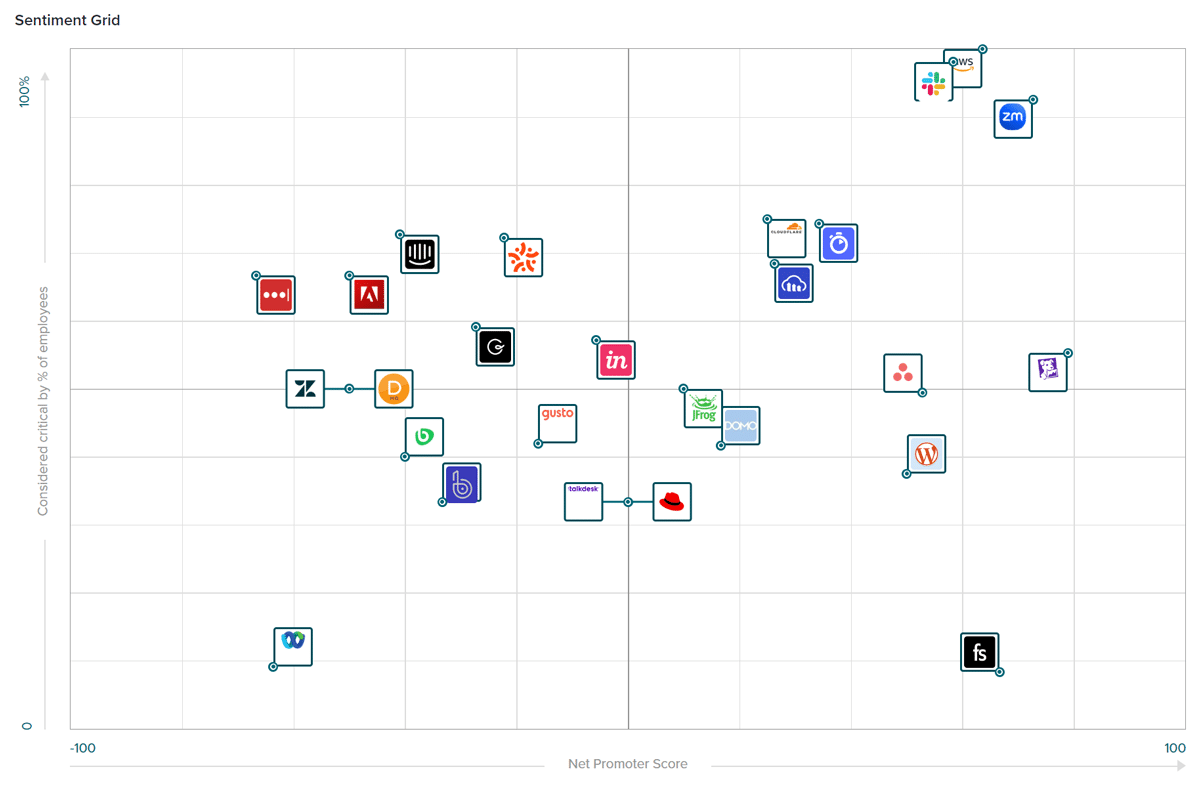
- User sentiment and feedback: Administer internal surveys for quick pulse checks to get direct feedback on tool usefulness and pain points. If a tool has low sentiment, it’s a clear indicator of low adoption and potential shelfware, making it a candidate for consolidation under application portfolio management.
- Regular audits: Routinely monitor app and license usage to optimize SaaS usage.
Empower IT as a strategic partner
By providing visibility and automation, IT shifts from being a cost center to a strategic partner that enables the business to efficiently select, deploy, and utilize the tools necessary for success. Gartner forecasts that 70% of organizations using multiple SaaS applications will centralize their management through SaaS management platforms to address these growing challenges. A key goal of this centralization is to optimize SaaS usage, and organizations that don’t adopt a SaaS management platform will no doubt be left behind.

Optimize SaaS usage with an end-to-end SaaS management platform
Among other great features, leading end-to-end SaaS management platform vendors offer a centralized dashboard full of insights into all your organization’s applications, licenses, contracts, vendors, and users.
- Discover your entire tech stack, including Shadow AI: BetterCloud provides a centralized dashboard that offers insights into all your organization’s applications. No SaaS application can hide.
- Contract negotiation: Fuel conversations with key insights into employee sentiment and usage levels.
- Monitoring and reporting: Regularly track and analyze SaaS usage data to pinpoint trends and potential areas for optimization, providing support to users to encourage maximum utilization.
- Benchmarking: Determine how best to utilize your tech stack with key benchmarking insights with others in your industry.

Continuously improve to optimize SaaS usage
Commitment to improvement is key to sustained savings and allows organizations to continually optimize high levels of SaaS usage.
Start with foundational visibility provided by software asset management and then move into the strategic prioritization of application portfolio management. Next, focus on tactical execution of managing software licenses.
By making these processes cyclical and data-driven, organizations achieve more than just cost savings. They gain IT operational excellence, boost security, and ensure that technology investment directly correlates with business output. The investment required to establish a strong SaaS governance program to optimize SaaS usage is minimal compared to the staggering, recurring cost of undiscovered shelfware.
Take control today and fully optimize SaaS usage and ensure every subscription delivers its full value.
Is your company ready? Download the IT Leader’s Mega-Guide to Saving on SaaS or grab a personalized demo of BetterCloud, a 2025 Gartner® Magic Quadrant™ Leader for SaaS Management Platforms and G2 Winner.
EDITOR’S NOTE: THIS IS UPDATE FROM A 2024 POST
FAQs on optimizing SaaS usage
How can we prevent shelfware from happening in the first place?
The best way to prevent shelfware is to implement a strict, centralized procurement process combined with automated de-provisioning. Insist on Just-in-Time (JIT) provisioning (assigning licenses only when a user needs them, not before) and link your HR system to your SaaS Management Platform to ensure licenses are immediately reclaimed when an employee leaves. This proactive approach stops unused licenses from being purchased or remaining active.
What is the difference between software asset management and application portfolio management?
Software asset management is focused on the licenses and compliance—it provides the data (who is using what, and how much it costs). Application portfolio management is focused on the strategy and business value—it uses SAM data to decide if a tool should be kept, replaced, or consolidated based on its functional overlap and overall utility to the business. Both are required to fully optimize SaaS usage.
What are the quickest ways to optimize SaaS usage for immediate cost savings?
The quickest ways involve “license harvesting” and “tier optimization.” License harvesting means automatically reclaiming seats from users who have had zero activity for 30–60 days. Tier optimization means downgrading users from expensive premium licenses to standard licenses if utilization data shows they are not using the premium features (a key function of managing software licenses).
Why is automated de-provisioning essential for managing software licenses?
Automated de-provisioning is essential because manual processes are prone to error and lag. Every day a departing employee’s license remains active, the company is wasting money and creating a common security vulnerability via dormant account risk. Automation instantly revokes access and returns the license to the pool, ensuring compliance and minimizing unnecessary expenditure, which is vital for efficient managing software licenses.
What role does application portfolio management play in eliminating redundant tools?
Application portfolio management provides the framework for functional rationalization. It identifies areas of overlap (e.g., three different project tracking tools) and forces the organization to consolidate onto one “best-of-breed” solution. By eliminating redundant tools, APM significantly reduces complexity, license sprawl, and cost, helping to optimize SaaS usage enterprise-wide.
How can software asset management data be used to effectively optimize SaaS usage during contract renewals?
Software asset management data provides negotiation leverage. Instead of accepting vendor projections, you can use precise utilization reports (e.g., “We currently use only 750 of 1,000 seats”) to negotiate a lower volume commitment or better per-seat pricing. This data-driven approach ensures you only pay for the capacity you truly need, achieving a higher ROI and sustained success in your efforts to optimize SaaS usage.