
Does this app still spark joy? A minimalist’s guide to SaaS governance
January 29, 2026
6 minute read

In the spirit of the new year, let’s talk about tidying up an often forgotten item: your tech stack.
Your workspace should be streamlined—every tool with a purpose, every license accounted for. But for boots-on-the-ground IT admins, it often feels like a crowded attic. A decade of easy, card-swiped fixes created one thing: SaaS sprawl.
For boots-on-the-ground IT admins, pressure is mounting. Leadership now prioritizes efficiency over growth at all costs. They want consolidation, tighter budgets, and a locked-down perimeter with proof you’ve done it.
So how do you organize a mess you didn’t make—or tell a department head their favorite niche tool is clutter? You use minimal SaaS stack governance strategies to make the decision obvious.
This is your guide to SaaS governance best practices for IT admins, viewed through the lens of digital minimalism. We aren’t just deleting apps; we are curating an ecosystem. We are moving away from the chaos of “more” and toward the clarity of “enough.” Using the principles of intentionality, we’re going to help you transform your environment into a space that doesn’t just function, it sparks joy for the admins who manage it.
The weight of digital clutter
Before we talk about tidying up your digital workspace, we must acknowledge why we are here.
In a traditional office, clutter is physical. Think stacks of paper, tangled cables, and overflowing supply closets.
With the cloud, clutter is invisible, but its weight is felt in different ways.
- Security debt: Unmanaged OAuth tokens, orphaned accounts, and apps with excessive “Read/Write” permissions.
- Financial friction: Duplicate licenses, auto-renewals for tools nobody uses, and “pro” tiers purchased by individual departments.
- Cognitive load: The “death by a thousand tabs” effect where users context-switch across five overlapping tools.
This is the core of why SaaS sprawl management for IT admins has become a top priority.
Step 1: The discovery
You cannot manage what you cannot see and spreadsheets only show you what you already know to look for.
To understand how to reduce SaaS sprawl in enterprises, you need a true baseline of reality that includes financial data, endpoint activity, and actual utilization.
That baseline should include:
- Financial data: Subscription and SaaS spend across corporate cards, AP, and ERP systems (not just what someone remembered to label as “software” in a spreadsheet). If a manager is expensing a $20/month AI tool, it’s part of your stack whether you like it or not.
- Endpoint and browser activity: Extensions and lightweight tools installed outside formal procurement, where “free” utilities often introduce real risk.
- Actual utilization: License and seat usage across every application, so you can immediately identify unused access and reclaim budget.
The problem with spreadsheets is that they freeze this data in time. They’re outdated the moment they’re saved, require constant manual upkeep, and can’t scale as your SaaS environment grows.
Better yet, BetterCloud replaces the spreadsheet entirely. By integrating directly with your finance systems, ERP, identity provider, MDM, and SaaS applications, BetterCloud continuously discovers subscriptions, correlates spend with usage, and exposes redundant tools in real time.
Instead of manually discovering that you’re paying for 15 different whiteboard tools or three overlapping project management platforms weeks or months later, BetterCloud surfaces that insight automatically and keeps it current.
This isn’t about creating a “before” spreadsheet. It’s about establishing a living baseline of reality. One that stays accurate, actionable, and complete as your environment evolves.
Step 2: Deprovisioning “ghost apps”
We often keep niche tools “just in case” a dev needs a specific IDE or marketing needs legacy data. Stop.
If an app has sub-5% utilization, it is a vulnerability, not a tool. Archiving the data and revoking OAuth tokens isn’t just a cleanup – it’s a security necessity. Frame these conversations with department heads as a “migration to supported enterprise standards” rather than a deletion.
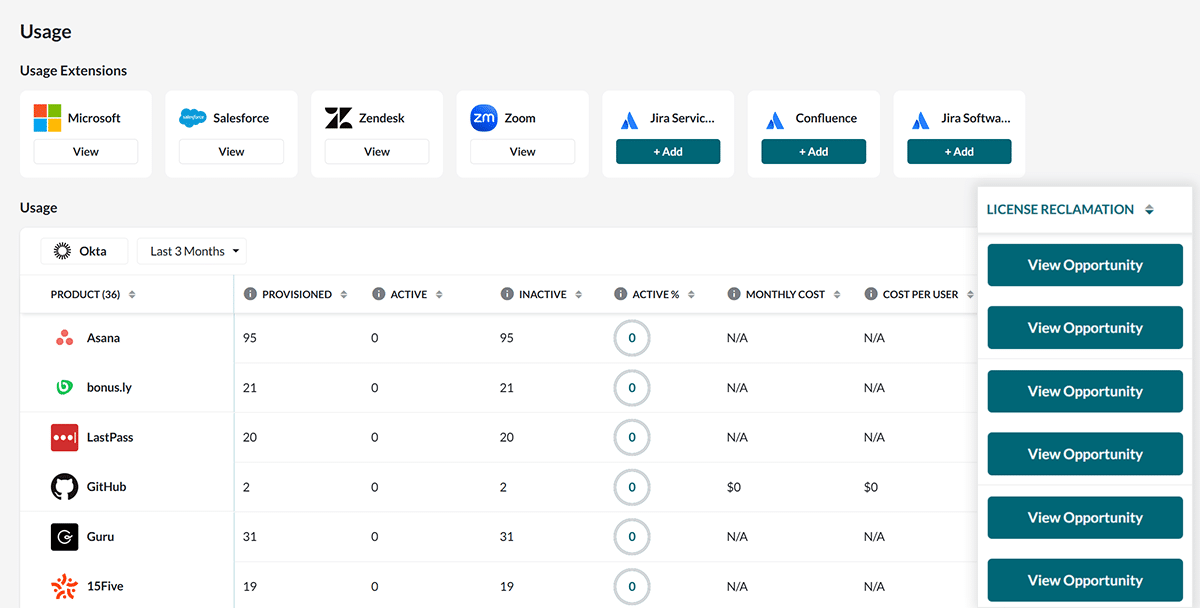
By leveraging BetterCloud’s usage insights in the Spend Optimization module, we can move away from guesswork and toward automated security hygiene:
- Identify the risk: If BetterCloud surfaces an app with a low utilization rate, it is no longer a tool, it is a vulnerability.
- Automate license reclamation: Use BetterCloud to trigger automated license reclamation workflows. This doesn’t just save costs; it systematically revokes OAuth tokens and closes off-boarding gaps that manual audits miss.
Step 3: Solving functional overlap
In a well-organized home, you don’t keep spoons in the bathroom and hammers in the kitchen. Items are grouped by their purpose.
Your SaaS stack should follow the same logic. Many IT environments suffer because they have functional overlap. This is when you have multiple tools doing the exact same thing in different rooms of the company.
Categorize your stack to identify redundancies, for example:
- The communication drawer: (Slack vs. Teams vs. Zoom). Why are you paying for three?
- The documentation drawer: (Notion vs. Confluence vs. Drive). Split documentation creates data silos and lost SOPs.
The minimalist requirement: Every app must have a category and an owner. If an app doesn’t have a clear category, it is likely a “distraction tool.” If it doesn’t have a designated owner (a person in the business responsible for its budget and user list), it is “abandoned property.”
If an app has no home and no parent, it doesn’t belong in your house. This categorization allows you to show leadership exactly where the redundancies are. It’s much easier to justify a budget cut when you can show that you are paying for four different “Utility” apps that all do the same thing.
Step 4: The “one in, one out” policy
The hardest part of SaaS governance is preventing the creep from returning.
IT admins must adopt the “one in, one out“ rule for SaaS procurement. The next time a department head comes to you with a “must-have” new AI-powered productivity tool, your response shouldn’t be a flat “no.” Instead, it should be: “That looks like a great addition to our stack. Which current tool are we sunsetting to make room for it?”
This shifts the burden of consolidation from IT back to the business units. It forces them to evaluate the value of their tools. It prevents the slow, silent creep of shadow IT and ensures that your stack only grows in quality, not in sheer, unmanageable quantity.
Automating the cleanup with BetterCloud
While the philosophy of minimalism is calm, the manual labor of SaaS governance is anything but. Trying to track every OAuth token, every “Sign in with Google” event, and every redundant license in a manual spreadsheet is a recipe for burnout. You are an IT professional, not a data entry clerk.
To maintain a “zen” state without the manual labor, you need an automated governance partner.
BetterCloud acts as the command center for your SaaS ecosystem:
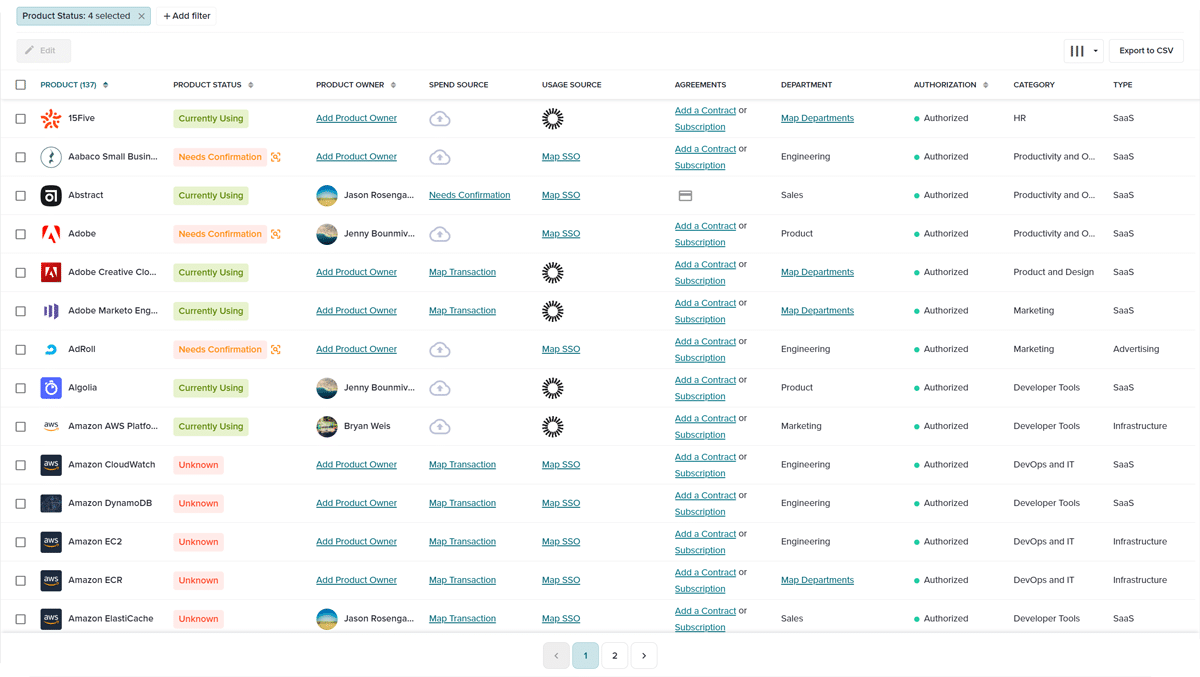
- Continuous discovery: It goes beyond SSO, scanning your environment to find shadow IT and free tools that bypass traditional gates.
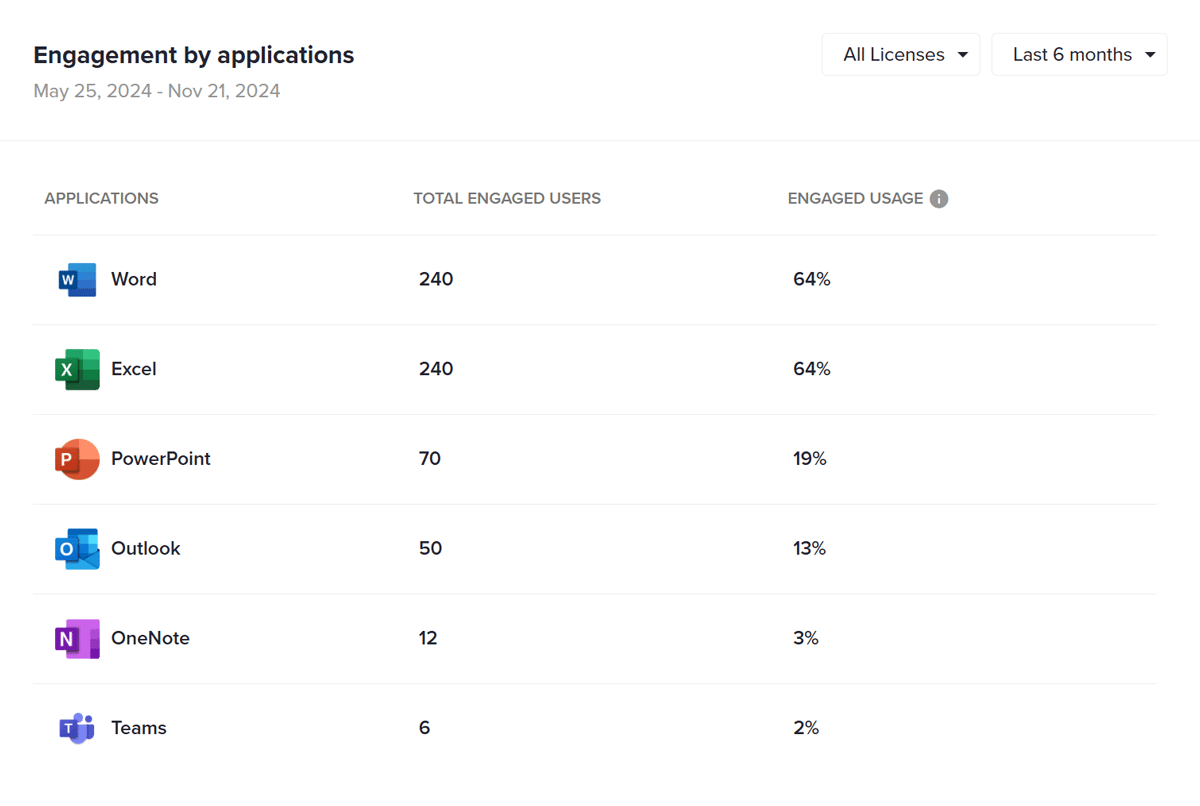
- Usage intelligence: Get real-time data on who is actually using what. No more guessing during renewal season.

- Automated offboarding: Turn a 50-step manual process into a single workflow. Revoke access, transfer files, and reclaim licenses in seconds.

- Zero-touch policy enforcement: Set rules that automatically alert you or revoke access when a user installs an unapproved, high-risk app.
Achieving the aesthetic of efficiency
Minimalism in IT isn’t about having the fewest apps possible; it’s about having the right apps. It’s about a stack that is so well-organized and automated that you, the admin, can finally stop “fighting fires” and start focusing on strategic projects that actually move the needle for your company.
Imagine a Monday morning where you don’t have to hunt down a missing license or worry about an unmanaged app leaking data. Imagine an environment where every tool is purposeful, every cost is justified, and every user has exactly what they need – nothing more, nothing less.
That is the power of SaaS Governance. It’s not just a checklist; it’s a way of working that respects your time, your budget, and your peace of mind.
Are you ready to clear the digital clutter? Schedule a demo now!