

How IT leaders track SaaS application adoption (and prove ROI)
SaaS powers every team—but without clear adoption tracking, seats go underused, costs creep up, and critical apps fail to land. This guide shows how IT leaders track SaaS application adoption, which metrics matter, and where automation accelerates results. You’ll also see how BetterCloud’s SaaS Management Platform (SMP) centralizes apps, users, and licenses so you can measure real activity, rightsize spend, and drive engagement.
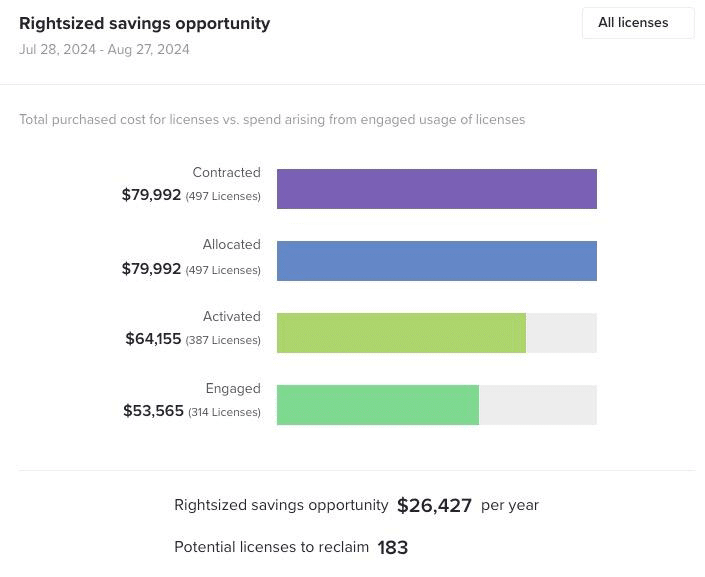
Today SaaS applications are pivotal for business operations. They offer flexibility, scalability, and cost-effectiveness. However, tracking their adoption is crucial for maximizing their potential.
IT leaders face the challenge of ensuring these tools are effectively utilized. Without proper tracking, organizations risk underutilizing valuable resources, leading to wasted investments and missed opportunities.
SaaS application adoption tracking provides insights into user engagement and software usage. It helps identify which features are most beneficial—data that is essential for driving technology-driven efficiencies.
Understanding user engagement metrics is key. It reveals how users interact with the software and guides future development and training efforts.
Software usage tracking within a SaaS management platform highlights which features are frequently used, helping prioritize updates and enhancements.
Effective tracking can significantly improve ROI. It ensures organizations get the most from their SaaS investments. By leveraging the right tools and strategies, IT leaders can optimize technology management, as highlighted in the State of SaaS 2025.
This guide explores comprehensive strategies for tracking SaaS application adoption and provides actionable insights for IT leaders to enhance user engagement and software usage tracking.
What “SaaS application adoption” really means
Adoption = breadth (who’s using the app) + depth (how effectively they use it). Strong adoption improves workflows, collaboration, and ROI, and gives IT the evidence to reinvest in high-value tools.
Understanding adoption helps gauge how effectively a SaaS tool is used. It provides insights into user satisfaction and productivity and fuels data-driven decision-making.
Successful SaaS adoption ensures that the entire organization benefits: workflows are smoother, teams collaborate better, and business outcomes improve.
Monitoring adoption metrics is essential. It helps uncover trends and potential issues early, preventing larger problems down the line.
Benefits of tracking adoption:
- Surface underutilized apps and overlapping tools
- Prioritize enablement around high-value features
- Reclaim/resize licenses to reduce waste
- Align technology with business outcomes
Staying informed about SaaS adoption allows IT leaders to align technology with business goals—crucial for sustained growth and agility.
Key metrics for SaaS application adoption tracking
Effective tracking hinges on choosing the right metrics. These reveal how users interact with your software and how well the application serves its purpose.
Adoption tracking metrics fall into several categories. Each covers a different aspect of user behavior; choosing the right combination is key to actionable insights.
Breadth (who/where)
Breadth tracks how widely an application is adopted across users; depth focuses on how intensely features are used. Together, they offer a holistic view of adoption.
Metrics like number of unique users and department engagement show breadth and help determine whether the application reaches its intended audience.
- Unique active users (daily/weekly/monthly)
- Department & role coverage
- New user activation rate post-provisioning
Depth (how well)
Depth can be analyzed by tracking feature utilization—identifying which features drive usage and which need improvement using a SaaS management platform.
- Feature utilization frequency (top/underused features)
- Task completion/flow success (are core jobs getting done?)
- Time on key features (signal of value realization)
Time to adopt, duration, and frequency of use
Time-to-adopt gauges how quickly users start using a SaaS application post-onboarding. Shorter times suggest effective engagement.
Understanding how long and how often users interact reflects application stickiness and satisfaction.
Evaluating these timelines helps identify hurdles and improve onboarding and engagement processes.
- Time-to-first-value (TTFV) from account creation to first key action
- Session duration & interaction frequency (stickiness)
- Adoption velocity during/after onboarding campaigns
Outcomes & sentiment
Retention and churn metrics provide insight into long-term engagement. High retention indicates continued value perception.
Understanding churn reasons helps address user discontent that could lead to abandonment.
User satisfaction scores offer subjective insights that complement usage data and highlight areas for development and support improvements.
- Retention vs. churn (by team/role)
- License utilization % (assigned vs. active)
- NPS/CSAT to complement usage data
Analyzing these metrics guides a strategic approach to SaaS adoption. IT leaders can make informed decisions to enhance user experience and boost usage.
Pro tip: Track metrics at app, team, and user segment levels to catch pockets of low adoption masked by org-wide averages.
Tooling: Dashboards, audits, and automated workflows
To efficiently track SaaS application adoption, leverage the right tools. They provide critical data for informed decisions and insights into user behaviors and application performance.
Analytics platforms process large volumes of data and highlight patterns in user behavior, aiding strategic planning.
Dashboards simplify data interpretation with visual representations that surface trends and anomalies.
User feedback systems capture qualitative data directly from users, uncovering potential usability issues and complementing quantitative analytics.
- Robust analytics platforms
- Interactive dashboards
- Comprehensive user feedback systems
Choosing the right combination enhances tracking capabilities and ensures a complete picture of software usage.
Analytics platforms and dashboards
Analytics platforms provide granular insights into SaaS usage and uncover behavior patterns and trends.
Dashboards translate data into visual formats, presenting key metrics accessibly for quick insights.
Customization, real-time reporting, and integration capabilities increase dashboard utility.
- Real-time reporting features
- Customizable views
- Integration capabilities
Integrating SaaS tracking with existing IT infrastructure
Integration with existing systems is a cornerstone of effective adoption tracking. Compatibility ensures seamless data exchange and a unified data ecosystem.
Security must be prioritized during integration to protect data and maintain compliance.
- Compatibility with existing systems
- Robust data security measures
- Comprehensive data exchange protocols
Centralized visibility with a SaaS management platform
An SMP consolidates app discovery, usage telemetry, and user/license context. With BetterCloud, IT can:
- Discover sanctioned and unsanctioned (shadow IT) apps to set a true adoption baseline
- Monitor real activity (who’s active, what features get used) with configurable dashboards
- Map usage to licenses for clean utilization reporting
License optimization & reclamation (automation FTW)
Adoption data should trigger cost actions:
- Auto-flag dormant accounts (e.g., 30+ days inactive)
- Automated license reclamation playbooks for underused seats
- Rightsize tiers (move users from premium to standard if features go untouched)
- Reinvest savings into enablement for high-value apps
Building a SaaS adoption tracking strategy
Build an effective strategy by aligning tracking with organizational goals so the data collected is meaningful and actionable.
Identify the most relevant metrics for your business that reflect both usage and operational impact.
Establish processes for regular data reviews to stay informed about trends and respond promptly.
Involve stakeholders from different departments to improve relevance and completeness.
Use both quantitative and qualitative data for a fuller picture of adoption.
- Align metrics with business goals
- Conduct regular data review sessions
- Involve cross-departmental stakeholders
- Employ a mixed-methods approach
Iterate as needs evolve to ensure continued relevancy and effectiveness.
Setting clear KPIs and benchmarks
Define KPIs that reflect core objectives and provide benchmarks for measuring success.
Identify KPIs that align with business goals (e.g., login frequency, key feature usage) and set clear benchmarks.
- Align KPIs with business objectives
- Define clear benchmarks
- Regularly review KPI performance
User segmentation and personalization
Segment users (e.g., by role, department, experience) to tailor strategies and address varied needs effectively.
Personalize training, support, and feature rollouts for each segment to drive engagement and satisfaction.
- Analyze user data for segmentation
- Develop personalized strategies for each segment
- Tailor training and support accordingly
Overcoming common challenges in SaaS adoption tracking
Common hurdles—shadow IT, security alignment, and user resistance—can hinder accuracy and usefulness of adoption data.
Identify and integrate shadow IT into official records to improve visibility and accuracy.
Align tracking mechanisms with security and compliance standards to protect data and privacy.
Engage users to reduce resistance and improve data quality.
- Identify shadow IT and integrate it
- Ensure security and compliance
- Engage users to reduce resistance
Addressing shadow IT and untracked usage
Shadow IT refers to unauthorized SaaS applications that operate outside IT’s purview and can distort adoption metrics.
Conduct regular software audits to identify untracked applications and extend oversight and integration.
Encourage transparent communication about new tool needs to reduce unsanctioned usage and align tools with business objectives.
- Perform regular software audits
- Foster communication across departments
- Align tools with company needs
By addressing shadow IT, organizations gain a clearer picture of usage, enabling better-informed strategy and a more secure environment.
Ensuring security and compliance in tracking
Security and compliance are foundational to effective tracking. Implement robust access controls and limit sensitive data exposure to authorized personnel.
Stay up to date with applicable regulatory standards and align practices accordingly.
- Implement strong access controls
- Stay informed on regulatory standards
- Align practices with compliance needs
Conduct regular audits and assessments to catch vulnerabilities early and maintain trust with users and stakeholders.
Leveraging user feedback and continuous improvement
Gather user feedback to understand experience and effectiveness. Regularly analyze it to guide improvements.
Align software capabilities with user expectations to enhance satisfaction and encourage consistent adoption.
Use both qualitative (surveys, interviews) and quantitative (behavioral analytics) inputs for well-informed decisions.
- Collect both qualitative and quantitative feedback
- Align software with user expectations
- Make informed decisions based on insights
Continuous improvement—adjusting training, support, and features—helps meet evolving demands and fosters meaningful integration.
Creating feedback loops and actionable insights
Establish structured processes and formal channels for feedback to ensure regular collection and utilization.
Use periodic surveys to gauge sentiment and gather improvement suggestions, and analytics to track interactions and uncover patterns.
- Conduct regular user surveys
- Use analytics to capture user interactions
- Combine qualitative and quantitative data
Review feedback with a focus on actionability. Prioritize issues that most impact user experience and implement changes based on concrete data.
Best practices for driving SaaS adoption and engagement
Adoption thrives on understanding users and providing robust support.
Identify key user groups and tailor communication and training to their needs.
Maintain timely, clear communications about updates and changes, and keep channels open for questions.
- Identify key user groups
- Tailor communication and training
- Maintain open communication channels
Encourage ongoing feedback and cross-functional collaboration to strengthen commitment and surface innovative solutions.
- Engage cross-functional teams
- Encourage regular user feedback
- Facilitate shared commitment to success
Training, support, and communication strategies
Offer ongoing training that evolves with software updates to increase confidence and adoption.
Provide a mix of formats (workshops, e-learning) to accommodate different preferences and schedules.
- Offer workshops and e-learning modules
- Ensure training programs evolve with software updates
- Accommodate different learning preferences
Ensure support is accessible and responsive, and communicate new features or changes promptly to foster trust.
Using AI and automation for advanced tracking
Leverage AI to analyze large data sets, identify trends, and predict behaviors for deeper insight into adoption patterns.
Use automation to streamline data collection, reduce manual work, and improve timeliness and accuracy.
- Use AI for trend analysis
- Automate data collection processes
- Focus on strategic improvements
AI-driven analytics can highlight underused features and problem areas, while predictive analytics can forecast future adoption to enable proactive planning.
Aligning SaaS adoption tracking with business objectives
Align adoption tracking with business goals to ensure technology investments support broader organizational aims.
Identify core objectives, then develop targeted metrics that directly support those objectives.
Incorporate adoption data into business reviews to correlate usage with outcomes and justify investments.
- Identify core business objectives
- Develop targeted tracking metrics
- Correlate usage with business outcomes
Turning insights into action
Adoption metrics should drive impactful change. Translate data into clear strategies to refine investments and maximize ROI.
Use real usage data for proactive management and continuous improvement—aligning SaaS adoption with business goals for a streamlined, efficient operation.
For more on achieving maximum ROI, see finding value in your existing tech stack.
How BetterCloud supports SaaS adoption tracking
BetterCloud focuses on the parts of adoption that matter most: discovering what’s actually used, measuring real activity, and optimizing licenses. Its SaaS Management Platform centralizes apps, users, and licenses with dashboards that surface usage patterns and app overlap. With centralized SaaS visibility, IT uncovers sanctioned and unsanctioned apps to get a true adoption baseline and reduce sprawl. For utilization and cost signals, the software license management guide and playbooks like automated license reclamation show how to rightsize underused seats and reinvest in high-value apps. To set KPIs and compare trends, the latest 2025 State of SaaS report provides timely benchmarks for engagement and spend.
Want to see your adoption data in one place? Request a BetterCloud demo.
FAQs
Use a SaaS management platform to consolidate discovery, usage telemetry, and license data into one dashboard, then automate workflows (alerts, reclamation).